Commentary
What is the Principle Behind Glow in the Dark?

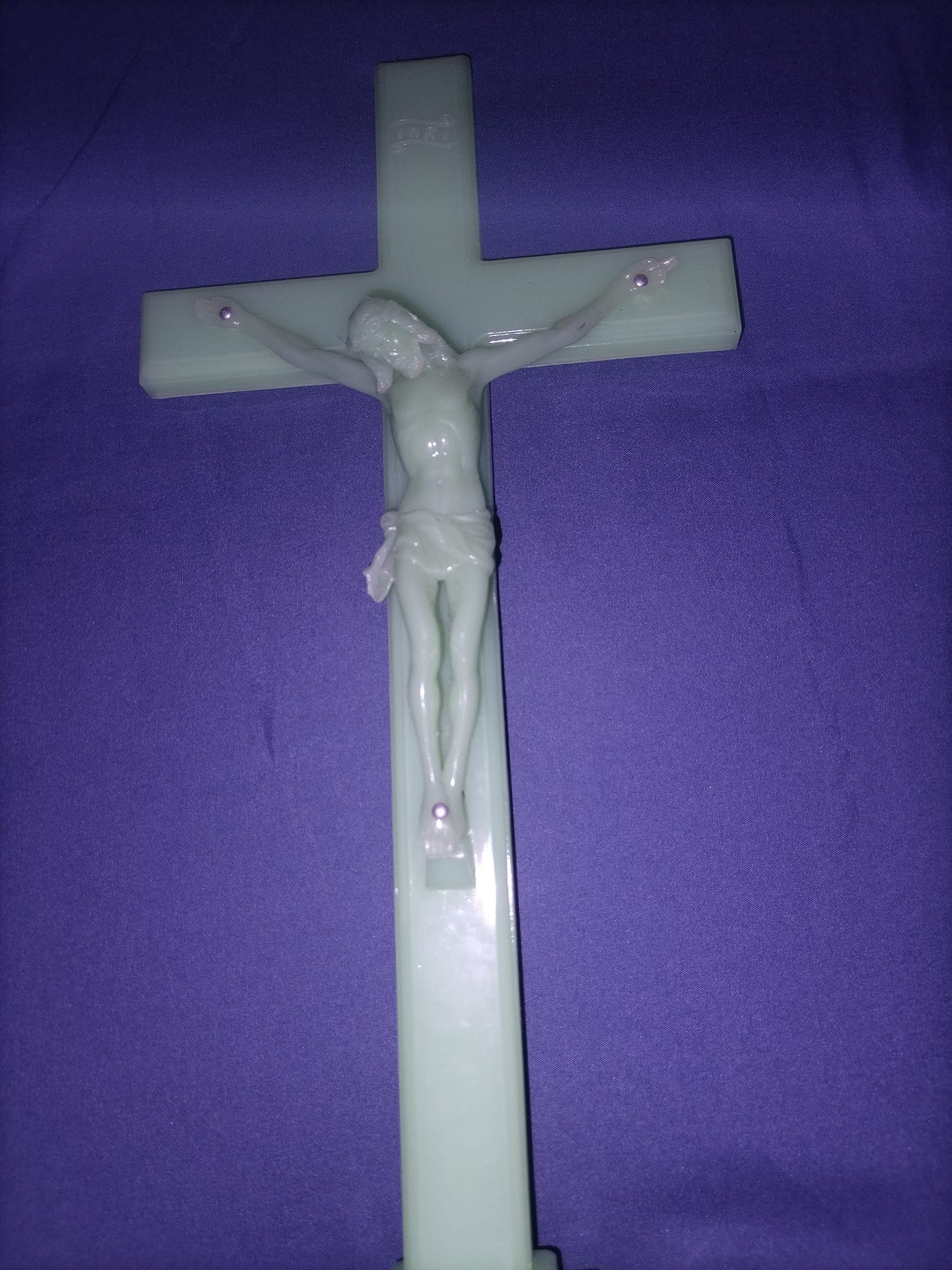
smart
By: Raymond Sucgang (Senior Researcher, DOST-PNRI)
Glow-in-the-dark religious statues, like other glow-in-the-dark objects, work based on the principles of photoluminescence, a phenomenon that involves the absorption and emission of light. Here’s how it works through the lens of chemistry and physics:
Chemistry: Phosphorescent Materials
The key materials used in glow-in-the-dark statues are phosphorescent substances, often made of phosphors like zinc sulfide or strontium aluminate. These compounds have the ability to absorb light energy and then slowly release it over time, producing a visible glow.
Absorption of Light (Excitation): When the statue is exposed to light (natural sunlight or artificial light), the phosphorescent materials absorb photons (light energy). This excites the electrons in the phosphor molecules, pushing them to higher energy levels (excited states).
Storage of Energy: Instead of releasing this energy immediately, the phosphor’s electrons get trapped in an intermediate state, a process that differentiates phosphorescence from fluorescence (which emits light almost immediately). This trapping occurs because of the unique crystal structure and energy gaps within the phosphor material.
Slow Release of Light (Emission): Over time, the electrons slowly fall back to their lower energy state, releasing the stored energy as visible light. This slow release is what causes the prolonged glow, even after the light source is removed.
Physics: Quantum Mechanics and Energy Transitions
The behavior of the electrons in phosphorescent materials can be explained using principles of quantum mechanics.
Quantum States and Energy Gaps: In quantum mechanics, electrons exist in discrete energy levels. When they absorb energy, they transition to higher energy states. In phosphorescent materials, there is a significant energy gap between the excited state and the ground state. The intermediate state (a “metastable” state) where the electrons get trapped is what causes the delayed emission of light.
Spin States: The intermediate state where the electrons are trapped is usually a “triplet state,” which is a quantum state with different spin properties compared to the initial excited state (“singlet state”). The transition from a triplet state back to a singlet state (where the electron returns to the ground state) is “forbidden” in quantum mechanics, meaning it occurs very slowly. This slow transition is what allows the statue to glow for an extended period after the light source is removed.
Practical Application
In religious statues, the phosphorescent material is either mixed into the paint or embedded in the material of the statue itself. When the statue is exposed to light, it absorbs energy, and when the lights are turned off, the stored energy is slowly released as a soft glow, which can last for hours.
This glow is often symbolic in religious contexts, representing the idea of divine light or spiritual presence that persists even in darkness.