Commentary
Ibajay Ati-Ati (A Call To My Fellow Ibayjanons and Guests)

By: Jun Barrientos Magpusao
Next week (January 22 – 28), our town of Ibajay in Aklan will have its celebration of our Municipal & Devotional Fiesta in honor of our beloved and miraculous Señor Santo Niño de Ibajay. Let us be aware that our town’s celebration is known as Ati-Ati. Let us call it by its true name, a name handed down to us by our ancestors.
Let us put to mind that by tradition, the Ibajay Ati-Ati is believed to have started more than 400 years ago based on stories handed down from generations to generations of Ibayjanons. As written years ago in a document, the Ibajay Socio-Economic Profile, the year was 1569 as the year of the miraculous appearance of the face of the Holy Child on a piece of driftwood caught by a childless fisherman, Hangoe, on his fishnet from the Ibajay River in a place called Boboc-on.
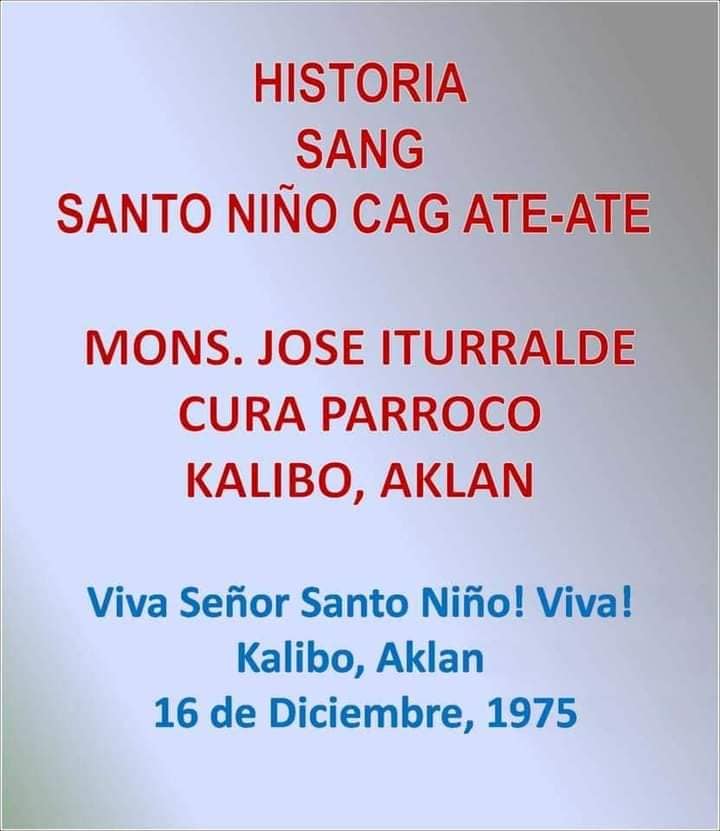
A document with ecclesiastical license was written on 16 December 1975 by the late Mons. Jose Iturralde, Parish Priest of Kalibo, narrating the traditional belief of the origin of the Ati-Ati in Ibajay and how the devotion to the Santo Niño with Ati-Ati spread throughout the province of Aklan. He wrote that the town of Malinao had its first Santo Niño with Ati-Ati in 1798 when Fr. Fernando de Legaspi introduced the devotion to the town after he attended the fiesta in Ibajay. He also wrote that Kalibo had its first Santo Niño with Ati-Ati in the year 1800 when Fr. Fernando de Legaspi was transferred there.
The 18-page (cover included) document written in Hiligaynon is titled “Historia Sang Santo Niño Cag Ate-Ate.”
It is also worthy to know and share with you that in 1963, author Roman dela Cruz of Kalibo wrote and publish in The Aklan Report an article titled “The Famous Ati-Ati of Aklan” mentioning about the celebrations in Kalibo, Ibajay, and Makato. Note
that he used the name “Ati-Ati.” He mentioned the different versions of the origin of the Ati-Ati celebration in Kalibo and how the term “Ati-Atihan” came about.
My point in coming out with this post is to emphasize, especially to my townmates particularly the younger generations, that the Ibajay Santo Niño Fiesta had been known as “Ati-Ati” and should always be known by this original name.
Mali eon kamo sa Ibajay, ma Ati-Ati kita.