Lifestyle
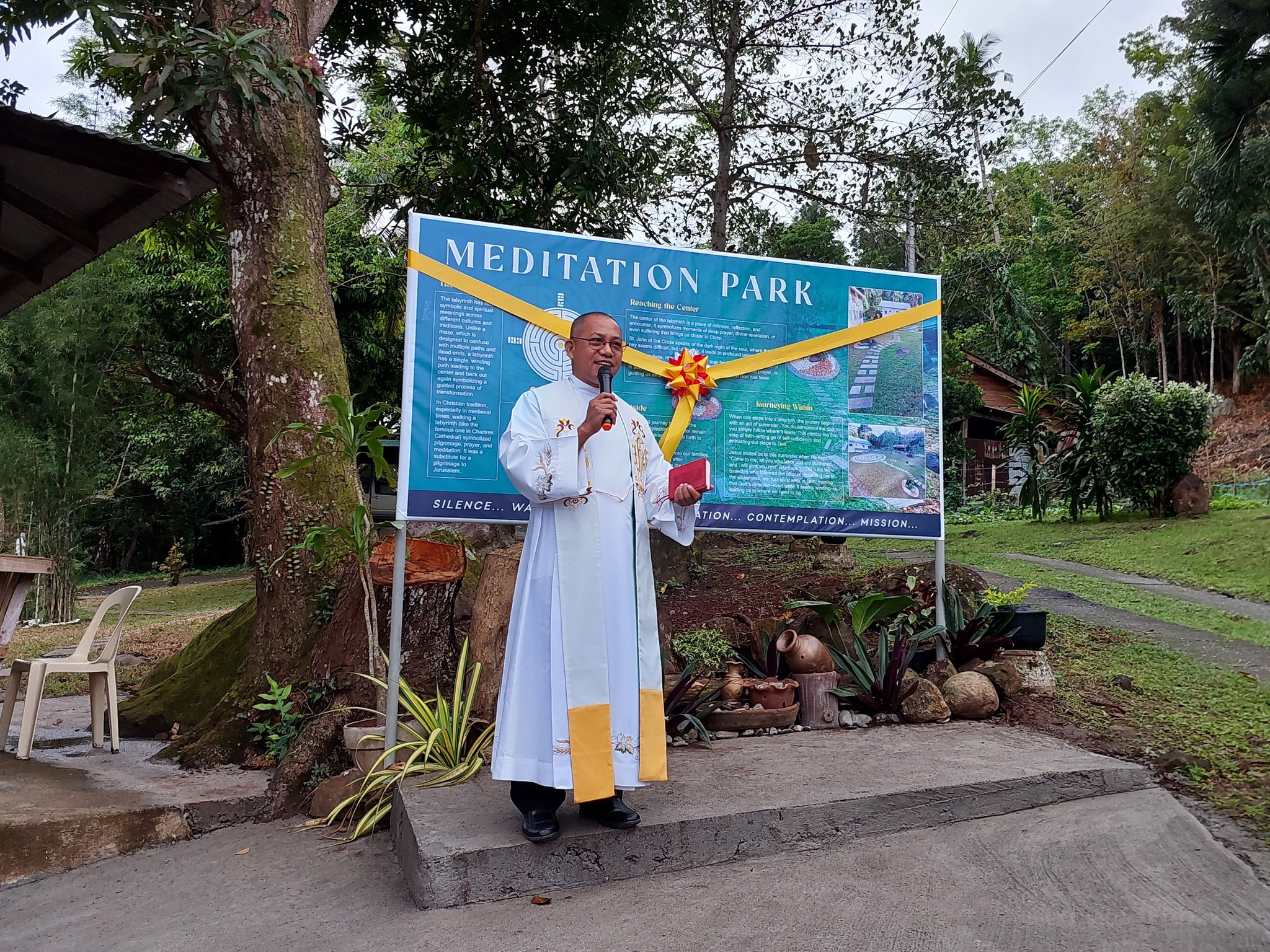
New meditation park @ SAS


By: Fr. Pol Villalva
(Saint Augustine Seminary, Calapan City)
A sacred place where seminarians, priests, alumni and visitors can walk slowly, pray intimately and meditate silently to encounter God so that we may be more effective bearer of God’s love in our world today.
An intimate experience of communion with Jesus Christ who is the Truth can combat the increasing misinformation, fake news and growing spirit of hatred and revenge.
Be calm. Be mindful. Be truthful.
**A special thanks to all the generous sponsors. We pray for God’s blessings and protection to be upon you. 
***Meaning and Explanations***
THE LABYRINTH
The labyrinth has rich symbolic and spiritual meanings across different cultures and traditions. Unlike a maze which is designed to confuse with multiple paths and dead ends, a labyrinth has a single, winding path leading to the center and back out again symbolizing a guided process of transformation.
In Christian tradition, especially in medieval times, walking a labyrinth (like the famous one in Chartres Cathedral) symbolized pilgrimage, prayer, and meditation. It was a substitute for a pilgrimage to Jerusalem.
JOURNEYING WITHIN
When one steps into a labyrinth, the journey begins with an act of surrender. You do not control the path; you simply follow where it leads. This mirrors the first step of faith—letting go of self-sufficiency and entrusting our steps to God.
Jesus invites us to this surrender when He says, “Come to me, all you who labor and are burdened, and I will give you rest” (Matthew 11:28). Like the Israelites who followed the pillar of cloud and fire in the wilderness, we, too, must walk in faith, trusting that God’s direction—even when it seems winding—is leading us to where we need to be.

REACHING THE CENTER
The center of the labyrinth is a place of stillness, reflection, and encounter. It symbolizes moments of deep prayer, divine revelation, or even suffering that brings us closer to Christ.
St. John of the Cross speaks of the dark night of the soul, where the journey seems difficult, but ultimately, it leads to profound union with God.
In our own lives, reaching the “center” may be those sacred moments of deep intimacy with God—whether in the Eucharist, in personal prayer, or in acts of love and service. It is where we realize that God has been guiding us all along.
RETURNING OUTSIDE
After encountering God, we must journey back into the world. This is the essence of discipleship: we do not remain on the mountaintop of spiritual experience; we go forth to share what we have received.
This is the call of the Gospel—to bring Christ into our families, communities, and daily work. The apostles, after encountering the risen Christ, did not stay in the Upper Room. They went forth to proclaim the Good News. Likewise, after our moments of deep prayer, we must return to our lives transformed, carrying the light of Christ.
**Walk meditatively and silently and experience to encounter God to be refreshed and equipped us in our daily mission in life.