Latest News
DOE: Overcoming flood-related hazards key to faster, safer power restoration

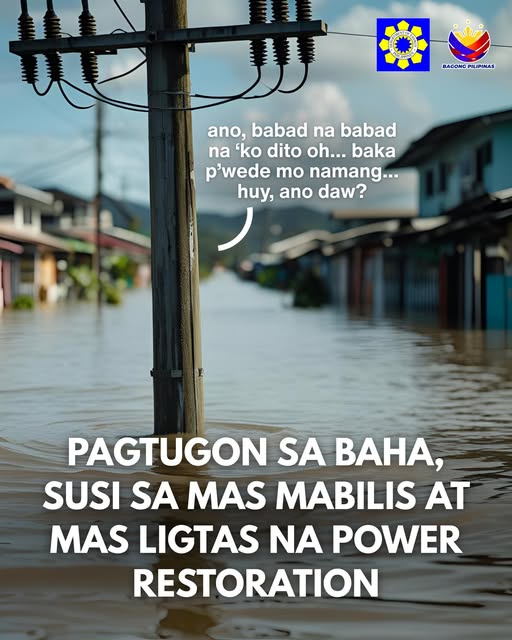
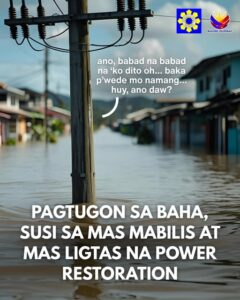
The Department of Energy (DOE) underscores that widespread flooding is now the single biggest obstacle to the immediate restoration of power in communities affected by super typhoons and torrential rains.
While power utilities and line crews are mobilized as soon as weather conditions permit, floodwaters often delay restoration efforts by days, sometimes weeks, beyond initial timelines. This reality echoes President Ferdinand R. Marcos Jr.’s remarks in yesterday’s press conference, where he stressed that flooding is a recurring national concern. This concern is well-founded, as flooding disrupts lives, hampers recovery, and exposes deep-seated challenges in infrastructure and disaster preparedness.
The recent combined impacts of Typhoons Crising, Dante, and Emong, intensified by the southwest monsoon, have brought this issue into sharp focus. As of July 31, 2025, five days after these storms exited the Philippine Area of Responsibility, Manila Electric Company (Meralco) reported 506 households in low-lying areas of Bulacan still without power due to floodwaters that have yet to subside. Pangasinan I Electric Cooperative (PANELCO I) likewise recorded outages lasting up to five days in inundated service areas, where crews could not proceed until water levels receded.
“Restoring electricity after a typhoon is not just about fixing broken lines,” said DOE Undersecretary Felix William B. Fuentebella and Task Force on Energy Resiliency Chairperson. “Flooding blocks access roads, submerges electrical equipment, and exposes our crews and the public to life-threatening hazards. We cannot rush restoration if it risks electrocution, equipment failure, or further damage. Safety always comes first.”
Flood-related delays arise from a combination of critical safety hazards and operational constraints. In many affected areas, flooded roads, bridges, and access routes cut off crews from reaching damaged power infrastructure, halting immediate repair efforts. Electrical assets such as transformers, substations, meters, and cables are often left submerged, requiring thorough drying, cleaning, and rigorous testing before they can be safely re-energized. Prolonged exposure to floodwaters also accelerates corrosion and deterioration, reducing the reliability and lifespan of vital components. At the same time, the transport of heavy equipment and replacement parts becomes severely hindered, or altogether impossible, when access routes remain underwater.
Beyond residential power outages, flooding also disrupts essential services. Gasoline stations, for example, often halt operations during floods due to the inability of personnel to reach their workplaces and the safety risks posed to both employees and customers. These disruptions can affect fuel supply chains and hinder transportation, commerce, and essential services for citizens relying on gasoline for vehicles and generators.
These compounded challenges make clear that, in the face of widespread flooding, restoration timelines and swift re-opening of gasoline stations are dictated not by the readiness of crews and the operational willingness of these establishments, but by the safety conditions on the ground.
These realities mean that, despite the readiness and commitment of linemen and engineers, floodwater ultimately dictate restoration timelines. The DOE calls on the public to support these efforts by reporting downed lines, avoiding contact with flooded electrical facilities, and heeding all safety advisories.
“Flooding has become a perennial challenge during our wet season,” Usec. Fuentebella added. “As the President rightly pointed out, this is a problem we must address not only for immediate recovery but for long-term resilience. The DOE is committed to working with power utilities, local governments, and national agencies to improve our readiness and restore power as soon as it is safe.