Agriculture
Magsasaka Siyentista Elvis Dela Merced’s Organic Farming Success in Caraga


by: Vic Thor A. Palarca
San Jose, Dinagat Islands- Elvis Dela Merced has been a pioneer of organic farming in San Jose, Dinagat Islands since 1988, transforming degraded hillsides into a lush 45-hectare diversified farm. When climate change began to severely affect his hometown, Elvis dared to imagine a thriving ecosystem where barren land once lay. Facing rugged terrain, limited access, and destructive typhoons, he persevered with patience and faith, gradually turning his vision into reality. His commitment has not only revived the soil but uplifted his community, consistently advocating for Filipino farmers’ development and welfare in the Caraga Region.
Transforming lives through farming
In the craggy hills of Barangay Cuarinta, San Jose, Dinagat Islands, where once only barren earth and tangled underbrush existed, now flourishes the Dela Merced Diversified and Integrated Organic Farm. Sprawled across 45 hectares, this verdant sanctuary stands as a powerful testament to one man’s vision, relentless perseverance, and deep faith. At the heart of this transformation is Elvis A. Dela Merced, MPA—a farmer, public servant, leader, and a dreamer whose life has become intertwined with the land he has nurtured.
Before the farm transformed into a place of permaculture, food forests, and sustainable agritourism, it lived only in Elvis’s imagination. Back in 1988, when the devastating impact of climate change was just starting, and the hills of Dinagat Islands in the Caraga Region lay stripped bare, Elvis dared to envision something different, a thriving ecosystem that could renew both soil and community.
“The land looked hopeless back then,” Elvis recalls. “But I believed that with patience and faith, this earth could heal, and so could our people.” The journey was far from easy. In the early days, there were no roads leading to these remote hills, no skilled hands ready to help, and unrelenting typhoons that threatened to undo every effort. Supplies had to be hauled painstakingly over slippery, rugged trails. Yet, despite such hardships, Elvis remained undeterred, driven by a steadfast commitment to restore the land and uplift those around him. “We faced many challenges. There were days when the storm would wash away our work and nights when hope seemed distant. But the community’s support kept me going,” he says with certain conviction.
Elvis’ primary sources of income currently come from raising goats and poultry, generating a steady profit of P300,000 per month. This income not only supports the daily operations of the farm but also ensures stable wages for his farm workers. Additionally, by introducing the Sloping Agricultural Land Technology (SALT) system in his hometown, he effectively addressed the challenges posed by the farm’s hilly terrain and difficult landscape.

Growing squash profitably and meeting Zac B. Sarian
One of Elvis’ highlights in his farming exploits was meeting the late and erstwhile Manila Bulletin columnist and editor Zacarias “Zac” Bolong Sarian.
Elvis met Zac in one of the Agrilink shows held at QC Circle, where Zac regularly shares ideas in an organized forum. Their shared passion for farming quickly formed a strong bond between them, especially as Elvis often sources planting materials from Zac’s nursery farm in Teresa, Rizal. Later, Zac visited Elvis’s hometown in Dinagat Islands to obtain planting materials of likway (also known as lagikway), a leafy shrub native to the Dinagat Islands.
Dubbed as the Father of Agriculture Journalism, Zac B. Sarian wrote a two-page spread in 2013 about his visit in Dinagat Island and Elvis’ squash growing technique that can grow up to six years. Squash is a popular and profitable crop locally known as kalabasa.
Elvis starts squash seeds indoors using pots or seedling trays filled with quality organic soil. Once the seedlings develop a few sets of healthy leaves, he transplants them directly into the plots if the weather conditions are favorable. In the garden, soil mounds are formed a couple of feet apart, or farther if growing larger varieties, since some squash produce giant leaves and large fruit. Generally, bigger seeds tend to produce bigger plants.
“When it starts fruiting put organic fertilizer with manures to the mother hill and after two nodes of the squash plant, put again a mix or perfect mix of manure and decayed farm wastes every two to three nodes with organic fertilizer so it will bear roots and generate flowers and fruits until six years with good care and water management. After the squash starts fruiting on its second or third node, put again mix of organic fertilizer and same thereafter. Kada naay bunga nga sanga sa kalabasa, count two to three nodes, then butangan og organic fertilizer aron muugat ug mutambok ug musanga ug mubunga napod ug kung naa napod bunga sa ika duha or ika-tulo nga nodes, butang napod organic fertilizer.” (When a squash branch has fruit, count two to three nodes and apply organic fertilizer so it will root, grow healthy, branch out, and bear fruit again. If there is fruit on the second to third nodes, apply organic fertilizer again), Elvis shares in the Cebuano vernacular.
Meeting Zac Sarian created numerous opportunities for Elvis to network with like-minded farming enthusiasts and actively participate in the country’s broader agricultural community. Through the rise of social media platforms and the internet, Elvis has been able to significantly expand his farming knowledge and expertise. Such digital tools have allowed him to stay informed of the latest practices, connect with experts, and contribute meaningfully to the farming sector.

Partnerships and government interventions
A pivotal turning point arrived through a partnership with the Agricultural Training Institute (ATI) and other government agencies such as TESDA, DA, DTI, DAR, and the LGU of Dinagat Islands. Such collaboration opened doors to attending vital trainings, mentorship, and ongoing support, including livestock, equipment, and technical guidance. Gradually, what started as a struggling patch of land evolved into a recognized Learning Site for Agriculture (LSA), a Magsasaka Siyentista hub, and a School for Practical Agriculture (SPA), where knowledge and innovation take root alongside crops.
A Magsasaka Siyentista (MS), or farmer-scientist, is a farmer recognized for effectively applying science and technology-based farming methods on their farm. Under the ATI’s Techno Gabay Program (TGP), the MS serves as a partner by sharing knowledge drawn from their own farming experiences.
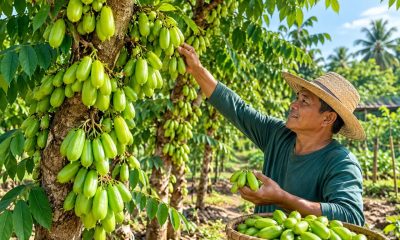
Today, Elvis’s farm thrives with life since towering bamboo groves sway in the breeze, goats and native chickens roam freely, and coconut-based agro-systems flourish. One farming season, dragon fruit vines climb sturdy trellises beside tilapia ponds, while a fully equipped training center accommodates students, farmers, and curious visitors eager to learn about sustainable farming.
Maria Lopez, a young farmer from a neighboring barangay, shares how Elvis’s example changed her life. “Before, I didn’t believe farming could be a path to a better future. But seeing how Elvis cares for this land and teaches us, gave me hope and skills I never imagined.” Beyond his farm, Elvis’s leadership skills develop through his roles as the Caraga Agricultural Learning Sites Association Inc. (CALESA) Vice Chairman, Magsasaka Siyentista ng Caraga Inc. (MASACA) President, Magsasaka Siyentista (MS) National President, and as the Lifelong Education and Technology Training Institute, Inc. (LETTI) Chairman. These positions amplify his mission, sharing hard-earned wisdom and inspiring agricultural transformation across the region and nation.

Underscoring hard work and community service
Looking ahead, Elvis dreams bigger. His vision includes expanding the farm into a premier agri-tourism destination, constructing dormitories to accommodate students, and increasing production capacity to generate an annual net income of ₱5 Million. Yet, amid these ambitions, his personal core values and conviction remains rooted in service and community. His advice to fellow farmers is profound and simple:
“Pangandoy. Paningkamot. Panaghiusa. Pag-ampo. Pagtudlo. Padayon sa pagtanum.” (Dream. Work hard. Unite. Pray. Teach. Keep planting.) Elvis sums up his experience with heartfelt hope. “Success isn’t just about harvests or income. It’s about growing something bigger like trust, knowledge, and a future for the next generation.”
From hills once stripped bare to a thriving green sanctuary, Elvis’s story is a compelling proof that success is not instant, it is grown patiently, purposefully, and with heart. From his humble beginnings as an orphan to becoming a national agricultural leader, he embodies how time, sacrifice, solidarity, and faith cultivate a legacy that endures.
His farm is no longer just a patch of soil. It is a living classroom and a symbol of hope—a shining example of what one Filipino’s unwavering determination can achieve. As the coconut trees rise taller in Cuarinta, so does the legacy of the man who planted them, inspiring young generations to come.